
GEO, or Generative Engine Optimization, is the term used for work on the visibility of content in the answers of generative engines. For a business, the practical question is this: is the information you publish accessible, reliable and useful enough to be cited? Here I separate the checks we can actually carry out from the engines' choices, which nobody can guarantee.
GEO and SEO: a shared foundation
A citation in an AI answer and a click from a traditional search result are different outcomes to track. Both need content that meets a real need. It isn't worth building two versions of the site, one for people and one full of formulas aimed at the models.
Ranking in classic results doesn't decide on its own whether a page will be cited. An AI answer with links also needs checking: the cited source might support only part of the text. That's why I would measure cited URLs and their relevance, not just brand mentions.
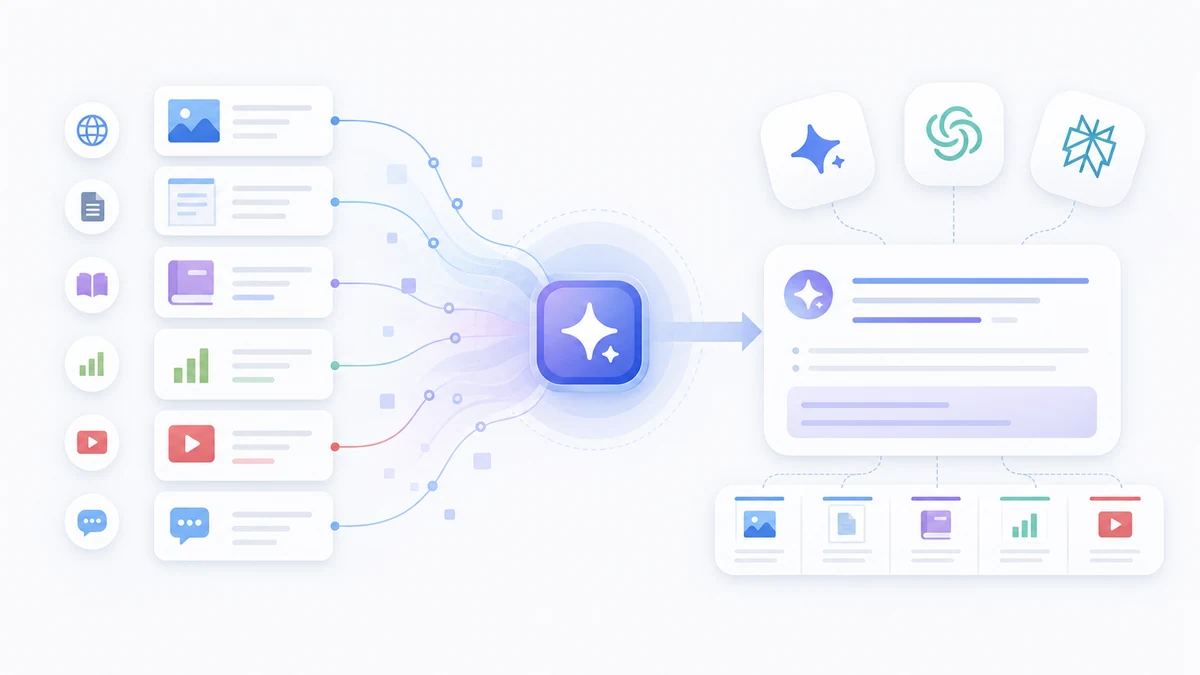
How AI Overviews, ChatGPT and Perplexity work
Google's AI features can combine several related searches to build an answer with links for further reading. Google's documentation states that SEO best practices still apply and that no special optimizations are needed. We can't infer from this that every other engine works the same way.
In answers that use web search, the system retrieves information and summarizes it. The work on your site is to publish useful material that can be checked, with clear scope and sources. The number and choice of links can change between questions, sessions and products.
GEO vs SEO: what really changes
I would use this distinction to measure outcomes, without turning it into a theory about secret signals or about formats that models would always prefer.
| Aspect | Traditional search | AI answers with search |
|---|---|---|
| Outcome | Page shown in results and visits to the site | Mention or link inside an answer |
| Content | Relevance, clarity and useful information | The same content, with explicit sources and limits |
| Access | Crawling and indexing, depending on the engine | Crawlers and rules specific to each product |
| Measurement | Search console data and conversions | Cited URLs, relevance, visits and conversions |
| Limit | Publishing doesn't guarantee rankings | Publishing doesn't guarantee citations |

Practical levers for being citable
These are editorial and technical practices to apply and measure. I'm not presenting them as a ranking of their impact on the algorithm:
- Open with a clear answer and develop it with the context it needs.
- Keep observed data, hypothetical examples and opinions clearly apart.
- Use FAQs for useful questions and tables for real comparisons, without adding them just for a supposed AI advantage.
- Link the source at the point where it supports a claim, and check its date.
- Keep visible text, metadata and structured data consistent.
- Say who is writing, what expertise they bring and which information needs updating.
Most of these levers overlap with good technical SEO: clean headings, correct schema, well-structured content. If you want the full foundation, I've collected it in the technical checklist for a business website: GEO builds on it, it doesn't replace it.
Search crawlers, training crawlers and llms.txt
Before changing robots.txt, find out what each bot is for. Allowing a search crawler and allowing your content to be used for training are separate decisions: you don't need to open the door to every bot to work on visibility.
llms.txt can offer a curated text index, but it shouldn't be presented as an indexing requirement or a guarantee of citation. Google states that no new AI files or special markup are needed for its search features. I would check accessibility, content and links first. Source: Google Search Central.
Connected data: beyond the single page
Internal documents raise a different problem: letting an authorized assistant retrieve information for the company's work. Making a knowledge base queryable doesn't mean making it public or indexable.
In LuCz projects, Vision can provide the technical base for connecting data and tools to an assistant through MCP. Permissions and available actions have to be designed around the process. I cover this in the guide on how to connect AI to company data.
How to check whether the work is useful
Define a set of questions your customers actually ask and record the engine, question, date, answer and cited URLs. Repeat the observations under comparable conditions and check whether the link really supports the answer. Complete the picture with crawling and indexing data from the search consoles, site visits and sales enquiries. A test in which you hand the URL to the AI yourself doesn't prove it would find the page on its own.
Publishing reliable information is work you can control. Being chosen as a source is an outcome you have to verify.
Frequently asked questions
What is GEO (Generative Engine Optimization)?
What's the difference between GEO and SEO?
How do I get cited by ChatGPT and Perplexity?
Which AI crawlers should I allow in robots.txt?
Is an llms.txt file actually useful?
If you want to understand what is getting in the way of your content being discovered, we can start from your most important pages and the questions that matter most for your sales. Take a look at LuCz services or write to me at matteo.lucrezio@lucz.dev with the site you'd like reviewed.
Sources
Written by

Matteo Lucrezio
Startupper | Lead Software Engineer